Guide · Renewables
Renewables work when the building is ready for them.
Heat pumps, biomass and solar thermal are not like-for-like boiler swaps. Each one changes how the heat is made, how hot the water in your pipes gets, and how much of the house has to change with it. Here is what each option actually asks for — so you can read any quote, ours included, with your eyes open.
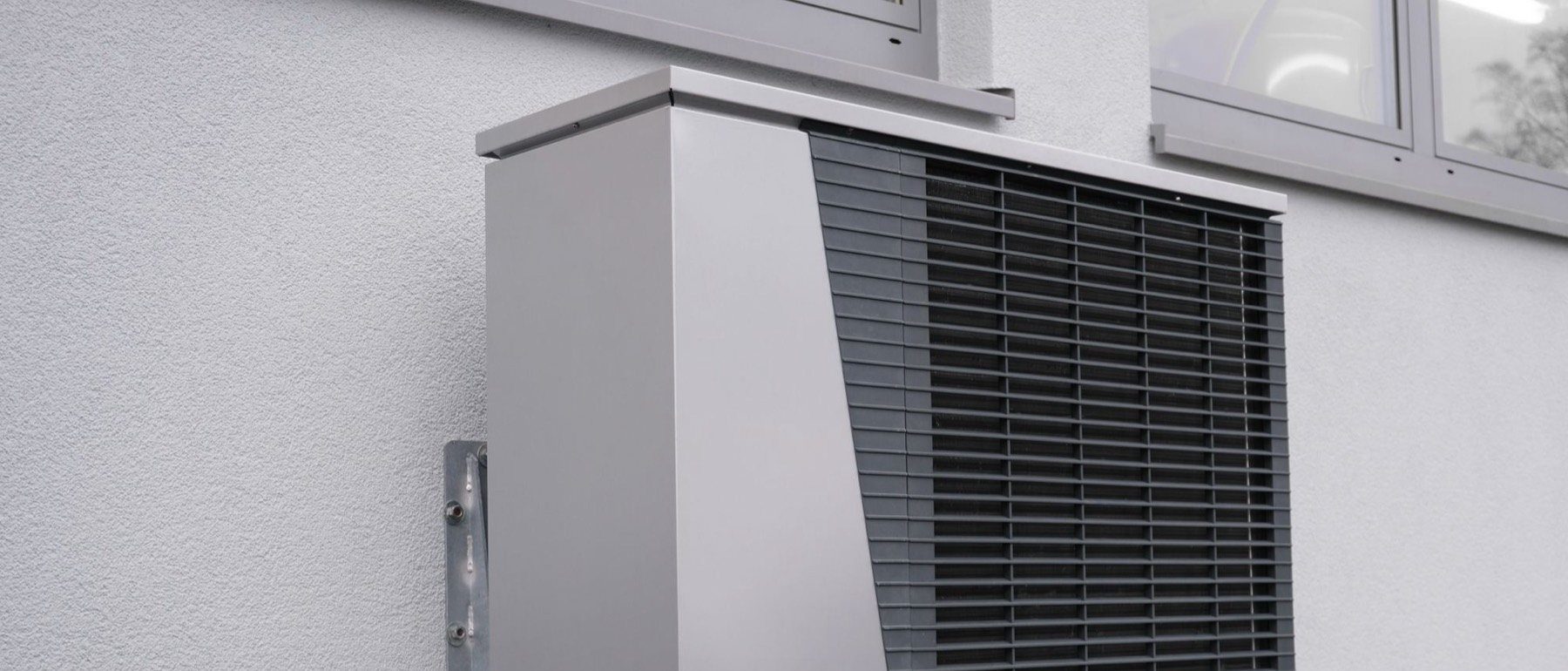
Air source heat pumps
A fan unit outside takes low-grade heat out of the air and a refrigerant circuit lifts it to a useful temperature for your radiators, underfloor loops and hot water cylinder.
What it asks of the building
Somewhere outside with airflow around it and a sensible route for the pipework indoors
Emitters sized for lower flow temperatures — usually bigger radiators or underfloor
A cylinder, because a heat pump stores hot water rather than making it on demand
A dedicated electrical supply, which is where doing the mechanical and electrical together pays off
Ground source heat pumps
The same refrigerant cycle, but the heat comes from the ground through buried horizontal loops or a vertical borehole, where temperatures stay far steadier through winter.
What it asks of the building
Land for trenched loops, or space and access for a borehole rig
Groundworks planned in — this is a build project, not an appliance swap
Higher up-front cost than air source, traded against steadier winter performance
The same low-temperature emitters and cylinder as any heat pump system
Biomass & log boilers
Wood pellets, chip or logs burned in a purpose-built boiler, usually feeding a large buffer store so the boiler runs in efficient long burns rather than short bursts.
What it asks of the building
Dry, accessible storage for fuel — and someone willing to handle it
A flue that suits solid fuel, and room for the buffer store
Regular ash removal and cleaning; this is the least hands-off option
Honest arithmetic on fuel delivery and price before you commit
Solar thermal
Roof collectors heat a fluid loop that pre-heats the water in your cylinder, so your boiler or immersion has less work to do — especially from spring through autumn.
What it asks of the building
A roof with reasonable orientation and no heavy shading
A twin-coil cylinder, or a replacement cylinder as part of the job
Realistic expectations: it cuts hot water cost, it does not heat the house
It sits happily alongside an existing gas, LPG or oil boiler rather than replacing it
Read the quote properly
Five things a renewables quote should never leave out.
- 01
A quote for a heat pump that never mentions your radiators or your cylinder. The emitters are the job as much as the unit is.
- 02
A heat output figure picked off a brochure rather than from a heat loss calculation for your actual rooms.
- 03
No word on the electrical supply, isolation or controls — which is exactly where a mechanical-only installer runs out of scope.
- 04
No plan for where condensate goes in freezing weather, or for how the unit will be serviced once the decking goes back down.
- 05
Biomass quoted with no answer to where the fuel is stored and who is carrying it in.
Where we stand on it
We fit heat pumps, biomass and solar thermal, and we also fit gas, LPG and oil boilers — which means we have no reason to push you towards one of them. If your house is a solid-wall property with small radiators and no room for a cylinder, a heat pump today would leave you disappointed, and we will say so. Get the insulation and the emitters right first and the renewable option starts to make sense.
Because we carry out the electrical work as well as the mechanical, the supply, isolation and controls are part of the same quote and the same visit rather than a second trade you have to chase.